
Unveiling the Art of Mezcal: The Traditional Techniques Behind Victorioso
By Victorioso Mezcal
Decade-long agave growth, three-day pit roasting, natural fermentation, and family-led distillation — the slow, uncompromising techniques behind Victorioso Mezcal.
The word "artisanal" is used carelessly in the spirits industry. At Victorioso Mezcal, it has a precise meaning — one defined by specific techniques, specific tools, and a specific family's unwavering commitment to doing things the old way, even when the old way is slower, harder, and more expensive than the modern alternative.
From Agave Field to Fermentation Vat
The journey begins in the agave fields outside Santiago Matatlán. Our maestro mezcalero — the Sernas family's fourth generation in production — selects each plant individually. Wild agaves are identified by the presence of the quiote stalk, nature's indicator of full maturity. Cultivated Espadín is harvested based on leaf width, piña density, and sugar content measured by refractometer.
Harvested piñas are loaded onto burros (donkeys) or small trucks and transported to the palenque within hours of cutting. Speed matters: a freshly cut piña begins oxidizing immediately, and the freshest agave produces the most vibrant mezcal.
The Roast: Fire and Earth and Time
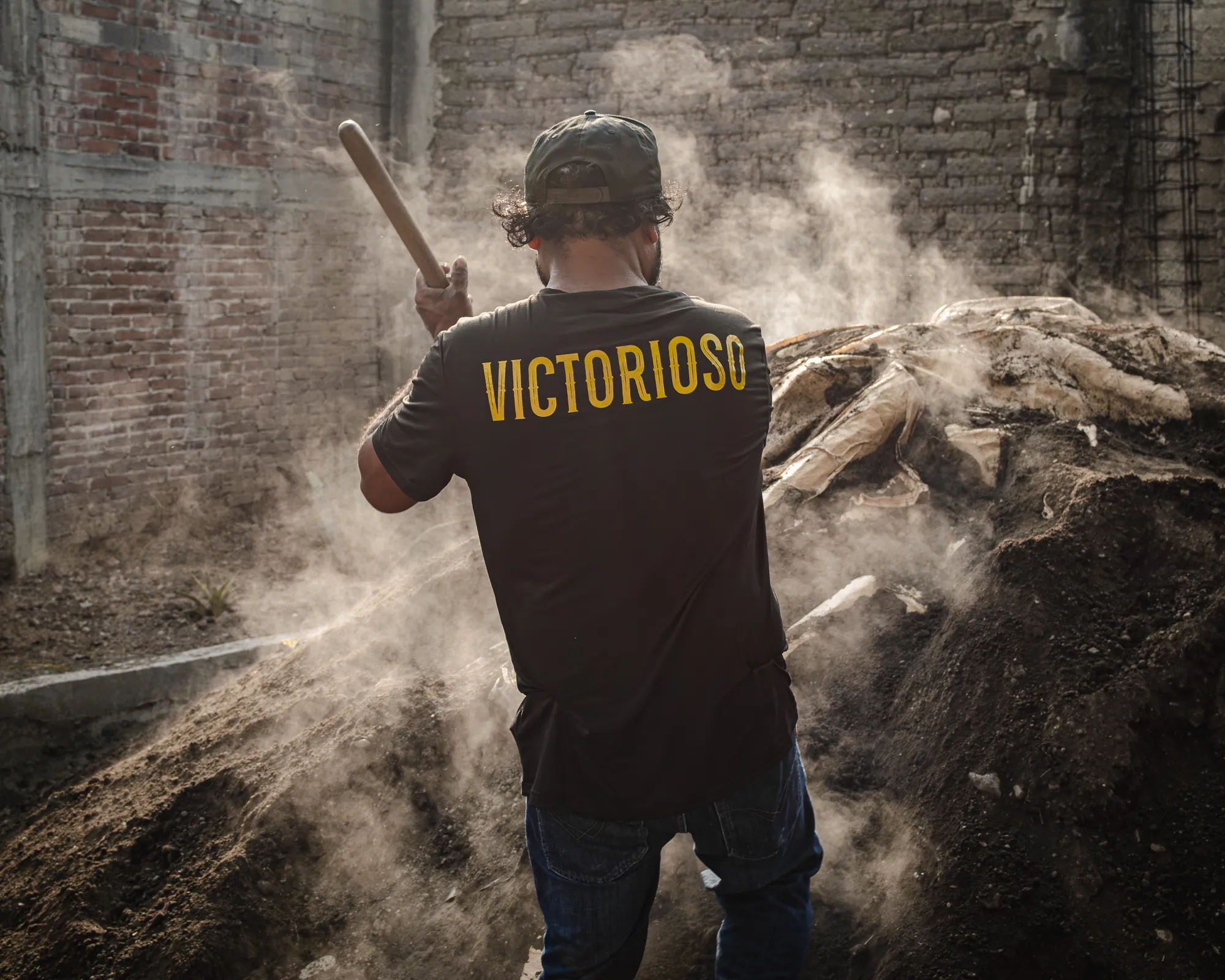
At the palenque, volcanic rock-lined pits are prepared with mesquite wood fuel. Rocks are heated to extreme temperatures before piñas are loaded and covered. The roast lasts 72 hours. During this period, the maestro monitors temperature, smoke, and aroma, making occasional adjustments to the earth covering to control heat distribution.
After roasting, piñas rest for 24 hours before crushing. This rest period allows heat to dissipate evenly and smoke compounds to settle throughout the piña.
Natural Fermentation: The Wild Conversion
Crushed agave fiber (bagazo) and juice are transferred to open wooden fermentation vats — often made from local pine or sabino (cypress). No commercial yeasts are added. Fermentation is initiated entirely by wild yeasts naturally present on the agave fiber, in the bagazo, and in the palenque environment.
This wild fermentation typically takes 5 to 10 days, depending on temperature and the ambient yeast population. Each fermentation is unique: the same agave, roasted identically, can produce subtly different fermented musts from one batch to the next — influenced by humidity, temperature, and the invisible ecosystem of the palenque. This variability is not a flaw; it is the living fingerprint of place.
Double Distillation in Copper
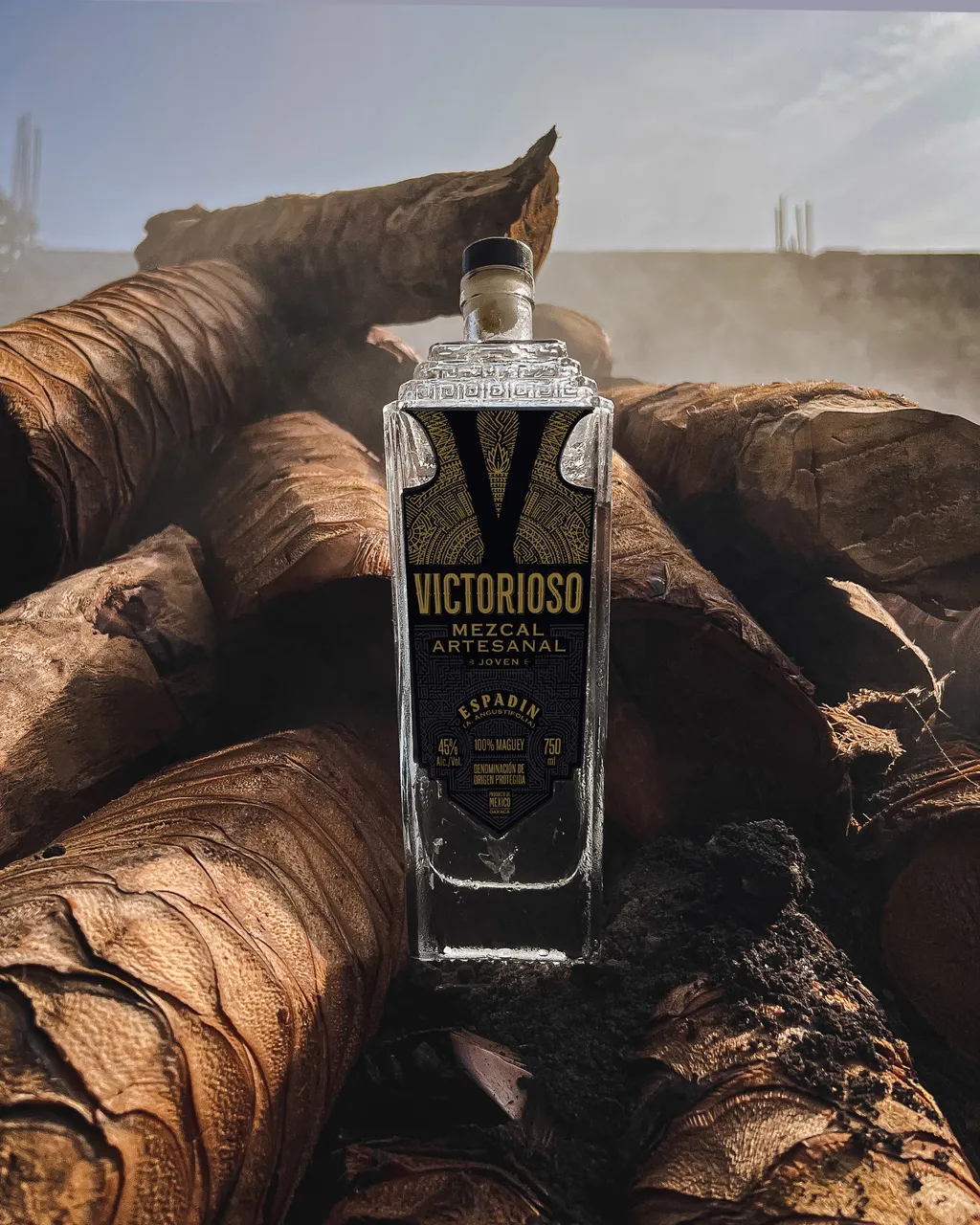
Victorioso Mezcal is distilled twice in hand-hammered copper pot stills. The first distillation (destrozamiento) produces a rough, low-proof spirit of approximately 20-25% ABV. The second distillation (rectificación) concentrates the spirit and removes undesirable compounds, bringing it to the final proof of 45% — a strength chosen by the Sernas family to best express the agave's aromatics without diluting its character.
No water is added after distillation. No additives. No colorings. What goes into the bottle is exactly what came out of the still — the pure, honest expression of agave, fire, fermentation, and family.
More from the Journal

100 Years of Sernas Family Mezcal Tradition at Novikov
On August 19, Victorioso Mezcal gathers at Novikov Beverly Hills to celebrate 100 years of the Sernas family’s mezcal tradition.
An Evening at Novikov — When Beverly Hills Discovered Mezcal
On a warm June night in Beverly Hills, Victorioso Mezcal took over one of LA's most celebrated restaurants. Here is what happened when artisanal Oaxacan craft met the most demanding room in California.